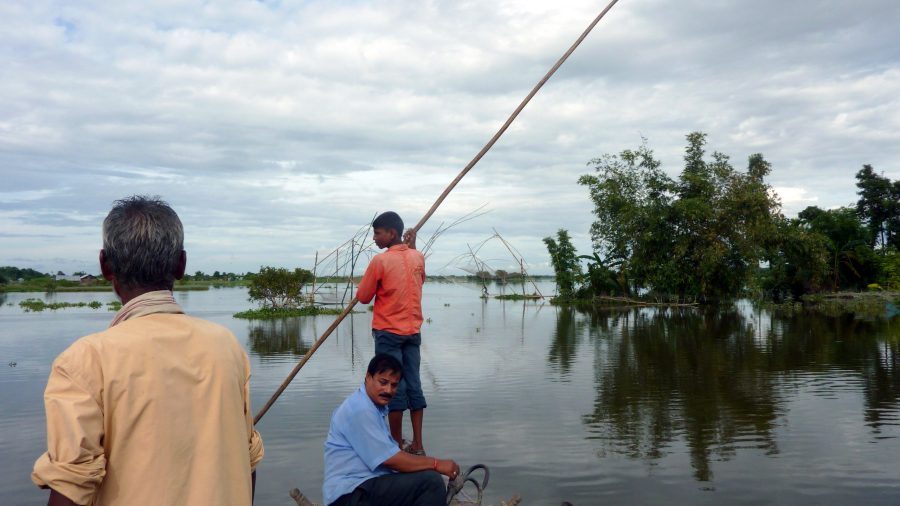
More than 100 people have died in Assam’s floods this year, with 700,000 people displaced and 1.2 million impacted overall as the disaster’s toll keeps climbing.
Around 2,700 villages have been destroyed, with Sivasagar district in upper Assam among the worst hit, along with Mon district across the border in Nagaland.
The flooding followed heavy rainfall in the Naga Hills between July 18 and 20, which triggered sudden surges in tributaries flowing into Assam’s low-lying areas.
A local vlogger described the scale of the destruction, saying trees as tall as 30 to 40 metres came down from the hills and homes were completely destroyed, calling it “a tsunami.”
Government officials have blamed excessive rainfall and climate change for the disaster, while opposition legislators and researchers point to unregulated riverbed mining as a worsening factor.
One tragic story to emerge involves two friends from different faiths who died together, after a Hindu man drowned attempting to rescue a Muslim woman caught in the floodwaters.
Researchers point to unrestrained stone mining along riverbeds such as the Dikhow as a contributing factor, arguing it has stripped away the natural cushioning that once absorbed flood surges.
Deforestation data shows Nagaland lost 14 percent of its tree cover between 2002 and 2025, with Mon district among the worst affected, a factor experts say has worsened runoff into Assam’s rivers.
Government officials have attributed the scale of the disaster primarily to unusually intense rainfall and climate change, while opposition legislators have pushed back, blaming unregulated mining operations.
The Brahmaputra river’s heavy sediment load steadily weakens embankments over time, and nearly 40 percent of Assam’s total land area is considered vulnerable to flooding in a typical monsoon season.
Assam floods almost every year during the monsoon, but this year’s disaster was unusual in that floodwaters from cloudburst-driven tributary surges arrived before the Brahmaputra itself reached peak levels, catching low-lying areas off guard.
Photo by EU Civil Protection and Humanitarian Aid, Wikimedia Commons, CC BY-SA 2.0