A seven-judge bench closed a legislative privilege case.
It was the N. Ravi case from Tamil Nadu.
The court said no dispute survived.
The constitutional questions remain open.
The order was on October 6.
In December 2003, the court framed substantial questions of law and referred the matter to a five-judge bench.
That bench noted a conflict between earlier rulings on legislative privileges and referred the matter to seven judges.
The reference then remained pending for about two decades, and the court fixed the hearing for October 6 in August 2026.
The Tamil Nadu Assembly had unanimously withdrawn its November 7, 2003 resolution in 2004, according to ThePrint.
Senior Advocate Raju Ramachandran told the court about the withdrawal, and the bench noted that the reference order had not taken notice of it.
Because the resolution stood recalled, the court held that there was no surviving cause of action.
The writ petitions were disposed of as infructuous.
The bench kept the legal questions open to be pursued in future in appropriate proceedings.
The open questions concern the interplay between Articles 194(3), 19(1)(a) and 21 of the Constitution.
Article 194(3) deals with the powers and privileges of State legislatures, Article 19(1)(a) with freedom of speech and Article 21 with the right to life and personal liberty.
The court has not held that legislative privilege overrides fundamental rights or the reverse, according to ThePrint.
Solicitor General Tushar Mehta said the issue may have become academic, according to LiveLaw.
Senior Advocate Kapil Sibal described the misuse of legislative privileges as a matter of great significance, according to LiveLaw.
Senior Advocate A.M. Singhvi remarked that the court had set records for the shortest hearing and quickest disposal of a seven-judge matter, according to LiveLaw.
A seven-judge Constitution bench of the Supreme Court disposed of the legislative privilege reference as infructuous on Tuesday, October 6, 2026.
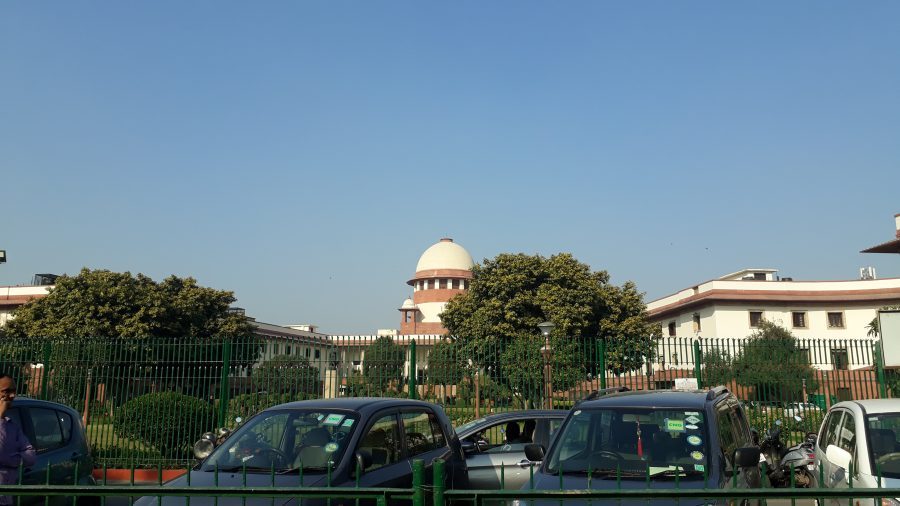
Supreme Court of India (file image), Wikimedia Commons, CC BY-SA 4.0